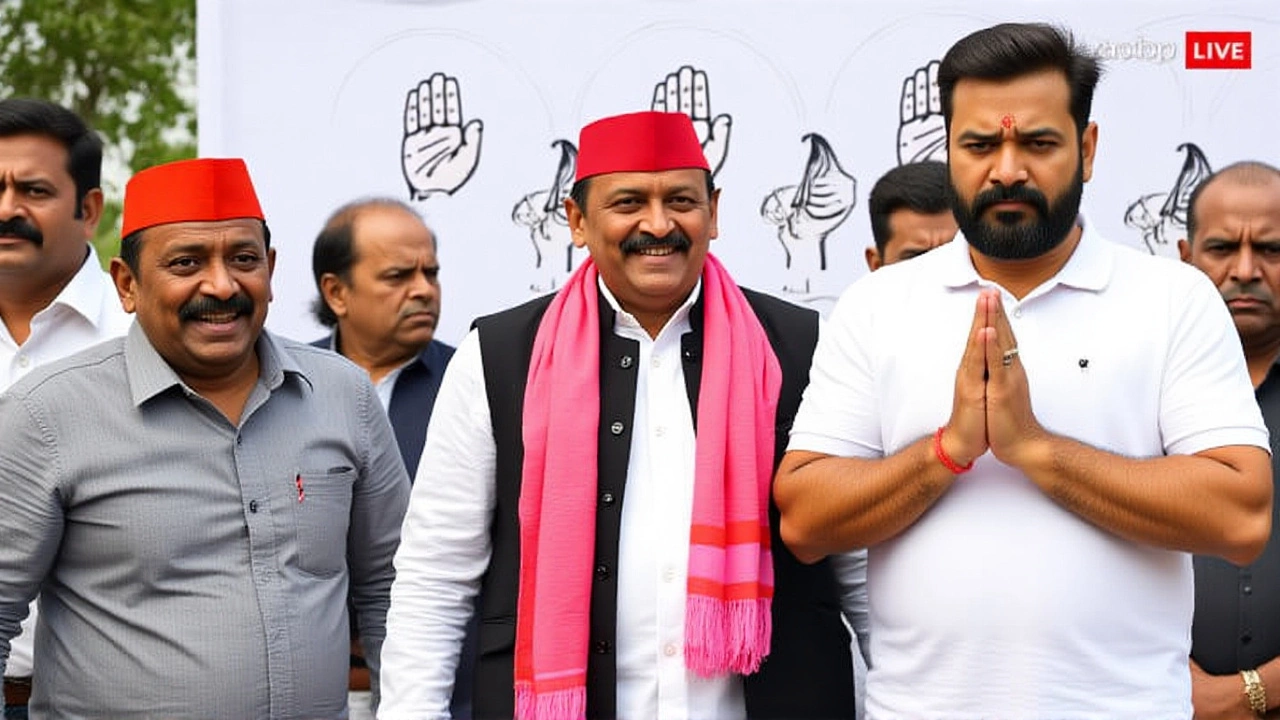

When Manish Jagan Agrawal, a close aide to Samajwadi Party President Samajwadi Party, took to social media following recent election results across India, he didn't mince words. His target? The Indian National Congress. But his message wasn't just criticism; it was a bold prediction for the future of politics in Uttar Pradesh.
The context is crucial here. Fresh off the legislative assembly election results from five states—West Bengal, Assam, Tamil Nadu, Kerala, and Puducherry—the political landscape in India has shifted dramatically. Agrawal’s post on X (formerly Twitter) claimed that the Samajwadi Party (SP) would defeat the Bharatiya Janata Party (BJP) in the upcoming 2027 Uttar Pradesh elections. It’s a significant claim, especially given the BJP’s recent successes.
The Political Fallout After Five-State Elections
Here’s the thing: these weren’t just any elections. They were bellwethers. In West Bengal and Assam, the BJP made historic inroads, breaking long-standing regional strongholds. For opposition parties like the SP, this creates both anxiety and opportunity. Agrawal’s comments come at a time when Akhilesh Yadav, the face of the SP, is under intense scrutiny about how to counter the BJP’s momentum.
But wait—why attack the Congress now? Turns out, the relationship between the SP and the Congress has been strained. By publicly criticizing the Congress, Agrawal is signaling that the SP intends to fight the 2027 battle on its own terms, without relying on traditional alliances. This is a strategic pivot that could reshape the opposition dynamics in India’s most populous state.
Akhilesh Yadav’s Accusations Against the BJP
While Agrawal focused on the Congress, Akhilesh Yadav himself has been leveling serious charges against the ruling party. In a press conference held in Lucknow on May 6, 2026, Yadav accused the BJP of undermining democracy through what he termed a "multi-layer election mafia model." He cited data from the Kunderki by-election and the West Bengal polls as evidence of manipulated electoral processes.
Yadav’s claims are bold. He suggested that the BJP uses sophisticated methods to manage election outcomes, implying systemic irregularities. These aren’t just rhetorical flourishes; they’re part of a broader narrative the SP is building to galvanize voters who feel disenfranchised by the current administration. The stakes couldn’t be higher with the 2027 elections looming.
The Math Behind the Anxiety
Let’s look at the numbers, because they tell a compelling story. Analysis of the West Bengal election results shows that out of 294 seats, approximately 71 were categorized as having a Muslim majority. The Trinamool Congress (TMC) won 50 of these, while the BJP secured 15. That leaves 223 seats classified as Hindu-majority constituencies. Of those, the BJP won 192—a staggering 85% share.
This demographic breakdown is causing palpable tension within the SP leadership. If the BJP can capture such a dominant share of Hindu-majority seats in West Bengal, similar patterns could emerge in Uttar Pradesh. For Akhilesh Yadav, whose base relies heavily on cross-community appeal, this presents a formidable challenge. The question isn’t just whether the SP can win, but whether it can prevent the BJP from replicating its West Bengal strategy in UP.
Strategic Shifts and Future Implications
In response to these challenges, the SP has already begun adjusting its strategy. Notably, the party severed ties with I-PAC, an election management consultancy firm, citing concerns over ethical practices and alignment with their values. This move underscores a desire for independence and control over their electoral machinery.
Meanwhile, fuel prices remain a critical issue for voters. As of the latest reports, petrol in New Delhi was priced at ₹94.77 per liter, and diesel at ₹87.67 per liter. Economic factors like these often play a decisive role in voter sentiment, potentially overshadowing ideological debates. For the SP, addressing economic grievances will be essential to winning back trust.
What’s Next for Uttar Pradesh?
The road to 2027 is fraught with uncertainty. With the BJP consolidating power in multiple states, the opposition must unite or risk further fragmentation. However, internal rivalries—like those between the SP and Congress—complicate this picture. Whether Akhilesh Yadav can navigate these tensions while presenting a credible alternative to Chief Minister Yogi Adityanath remains to be seen.
Analysts suggest that the next 18 months will be critical. Key indicators include coalition-building efforts, policy announcements, and grassroots mobilization. One misstep could prove costly, but a well-executed campaign might yet turn the tide. Only time will tell if Agrawal’s prediction holds water—or if it’s merely wishful thinking.
Frequently Asked Questions
Who is Manish Jagan Agrawal?
Manish Jagan Agrawal is a prominent leader within the Samajwadi Party and serves as a close aide to party president Akhilesh Yadav. He recently made headlines by attacking the Indian National Congress and predicting an SP victory in the 2027 Uttar Pradesh elections.
Why did Akhilesh Yadav accuse the BJP of election manipulation?
In a May 2026 press conference, Akhilesh Yadav alleged that the BJP employs a "multi-layer election mafia model" to manipulate outcomes. He referenced specific instances from the Kunderki by-election and West Bengal polls to support his claims.
How do the West Bengal election results impact Uttar Pradesh?
The BJP’s success in capturing 85% of Hindu-majority seats in West Bengal raises concerns about similar strategies being employed in Uttar Pradesh. This demographic shift poses a significant challenge for the SP, which relies on broad-based support.
What changes has the Samajwadi Party made recently?
The SP ended its partnership with I-PAC, an election consultancy firm, signaling a shift toward greater autonomy in managing its campaigns. This decision reflects the party’s effort to distance itself from controversial practices and rebuild public trust.
What role do fuel prices play in the upcoming elections?
With petrol priced at ₹94.77/liter and diesel at ₹87.67/liter in New Delhi, economic issues remain top-of-mind for voters. Parties that effectively address inflation and cost-of-living concerns may gain an edge in swaying undecided voters ahead of the 2027 polls.