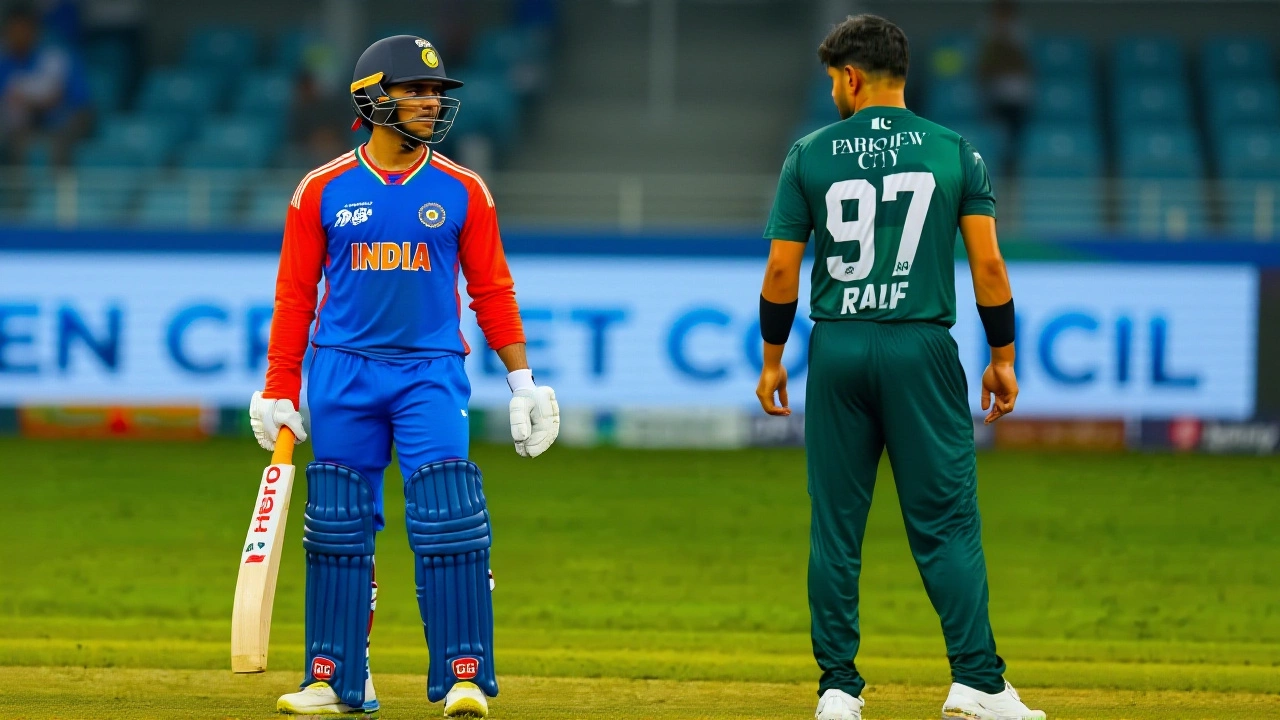

Just as the cricket world tunes into the opening matches of Indian Premier League 2026, the Indian government has slammed the door shut on any hope of resuming direct sporting ties with its neighbor. The Ministry of Youth Affairs and Sports issued a stark statement on Wednesday, confirming that the long-standing ban on bilateral series between India and Pakistan remains firmly in place.
Here’s the thing: while fans were buzzing about potential player exchanges or diplomatic thawing through sport, New Delhi made it clear—no bilateral games, no exceptions. But wait, there’s a nuance here that matters for the broader geopolitical landscape. While direct head-to-head series are off the table, India will continue to participate in multilateral events like the World Cup or Asian Games, where both nations might find themselves on the same field under international rules.
The Official Stance: No Bilateral Engagement
The announcement came via an official press release from the ministry, which serves as the primary body overseeing sports policy in India. According to reports from News24 Online, the ministry’s position is uncompromising: neither Indian athletes will travel to Pakistan for competitive series, nor will Pakistani players be invited to India for bilateral contests.
This isn’t just about cricket, though that’s obviously the biggest ball in court. The directive covers all sports. It means no football friendlies, no hockey tours, and certainly no cricket series. The logic? Security concerns and broader diplomatic tensions have kept these two nuclear-armed neighbors apart on the playing field since 2008, when the last bilateral cricket series was played.
"The ban on bilateral series between India vs Pakistan remains effective," the ministry stated, echoing language used in previous years. This repetition signals that this isn’t a new policy shift but a reinforcement of existing protocol. For Pakistani athletes, particularly cricketers who have historically looked to the lucrative Indian market for exposure and income, this is described by local media as a "severe blow."
Multilateral Events: The Exception That Proves the Rule
But here’s where it gets interesting. The ministry drew a sharp line between bilateral engagements and multilateral tournaments. In events like the ICC Cricket World Cup, the Olympics, or the Asian Games, India will abide by international regulations. If Pakistan qualifies for such an event hosted in India—or even if they meet in a group stage abroad—India will compete without political interference.
"If India hosts a major international multi-nation event, Pakistani players may be permitted to enter," the report noted. This conditional openness suggests that while diplomacy hasn’t warmed up enough for private invitations, India still respects the sanctity of global sporting institutions. It’s a delicate balance: maintaining national security stances while not isolating itself from the global sports community.
Think of it like this: you don’t invite your estranged neighbor over for dinner (bilateral), but you’ll both show up to the block party if the whole street is invited (multilateral). The distinction matters because it keeps the door ajar for future normalization, however distant that may seem right now.

IPL 2026: A Backdrop of Uncertainty
The timing of this announcement couldn’t be more significant. With IPL 2026 kicking off soon, speculation had been swirling online about whether Pakistani players might return to the league. After all, stars like Shahid Afridi and Mohammad Amir once lit up Indian stadiums. But the ministry’s statement effectively kills those rumors before they can take root.
According to CricketCountry, the tournament is set to begin on March 28, featuring a clash between Royal Challengers Bengaluru and Sunrisers Hyderabad. Another source claims the opener could be as early as March 26, with the final scheduled for May 31. Regardless of the exact start date, the message is clear: the IPL remains a domestic franchise league, closed to foreign nationals from countries with which India has suspended sports ties.
No special exemptions have been granted for Pakistani players. The BCCI, which organizes the IPL, follows the government’s lead on such sensitive issues. So, despite the financial allure of the IPL purse, Pakistani talent won’t be seen in orange jerseys anytime soon.
Why This Matters Beyond the Boundary Rope
Sports have always been a mirror of political relations between India and Pakistan. When ties improve, we see joint training camps or neutral venue matches. When tensions rise, sports go dark. This latest clarification reinforces the status quo: sports remain frozen in time, waiting for diplomats to do the heavy lifting first.
For fans, it’s frustrating. The India-Pakistan rivalry is arguably the biggest spectacle in world cricket. Matches draw billions of viewers globally. Yet, politics trumps passion every single time. Experts argue that keeping the ban in place sends a strong signal about national priorities—but critics say it also deprives millions of joy and connection.
What’s next? Watch for developments ahead of the 2027 Asia Cup or the 2029 World Cup. Those are the only arenas where the two giants might collide again until then. Until then, the silence on bilateral fronts will continue.
Frequently Asked Questions
Will Pakistani players be allowed to play in IPL 2026?
No. The Ministry of Youth Affairs and Sports confirmed that the ban on bilateral sports ties remains active. Since the IPL is governed by the BCCI, which aligns with government policy, Pakistani players are not eligible to participate in the 2026 season or any future editions unless the overall sports ban is lifted.
Can India and Pakistan play against each other in the World Cup?
Yes. The government clarified that while bilateral series are banned, India will participate in multilateral tournaments like the ICC World Cup or Asian Games according to international rules. If both teams qualify, they will compete normally within the tournament structure.
When was the last time India and Pakistan played a bilateral cricket series?
The last bilateral cricket series between India and Pakistan took place in 2008. Since then, all encounters have occurred in multilateral events such as the T20 World Cup or Asia Cup, reflecting the ongoing suspension of direct sporting engagement due to political tensions.
Does this ban apply to all sports or just cricket?
The ban applies to all sports. The Ministry’s statement explicitly mentioned that no bilateral series in any sport will be held between India and Pakistan. This includes football, hockey, badminton, and others, ensuring a uniform approach across all athletic disciplines.
What is the start date for IPL 2026?
Reports indicate conflicting dates, with some sources citing March 26 and others March 28, 2026, for the opening match. The final is expected to be played around May 31. The discrepancy highlights the preliminary nature of scheduling announcements at this stage.