

When Lionel Andrés Messi stepped onto the virtual pitch of Lusail Stadium in EA SPORTS FC 25, fans didn’t just watch a game—they watched history being rewritten in pixels. The simulated FIFA Club World Cup 2025 final between Inter Miami CF and Real Madrid CF, played on PlayStation 5 in 4K Ultra Realistic mode, became an internet phenomenon not because it was real—but because it felt more real than most actual matches. The video by Aapka Gamer, uploaded on June 12, 2025, showed Messi, at 37, slicing through Real Madrid’s defense like he was still in his prime, scoring one goal and creating chaos with every touch. The final whistle blew at 1-1, leaving viewers breathless. But here’s the twist: another video, posted months earlier by KB Test Lab on January 26, 2025, showed Real Madrid winning 4-2. Both are simulations. Neither happened on a real pitch. And yet, millions watched both.
The Virtual Showdown That Broke the Internet
The FIFA Club World Cup 2025 simulation wasn’t just a gameplay clip—it was a cultural moment. Fans of Inter Miami CF and Real Madrid CF didn’t just comment—they debated. At timestamp 302 in the Aapka Gamer video, the commentator’s voice cracked: "and then once Messi’s through one v one there’s no doubt that he’ll finish—he makes solid contact and he leaves the keeper with no chance, so they’re level at 1-1." That moment, replayed over 2.3 million times, became the defining image of the simulation. Messi, wearing the Inter Miami jersey with the number 10, danced past Jude Bellingham and Luka Modrić as if they were statues. At timestamp 545, Mbappé, in his Real Madrid kit, fired a curler that kissed the post. "Surely the equalizer," the commentator sighed. "Not a bad effort... but it’s gone just wide." The simulation wasn’t just about the stars. Jordi Alba and Sergio Busquets anchored Inter Miami’s defense with veteran precision, while Real Madrid’s midfield—led by Bellingham and Modrić—controlled possession with chilling efficiency. Analysts noted at timestamp 1139: "He caused the defense all sorts of problems. Scored one, but could have had a few more. Rushed a few of his chances. But overall, not a bad day’s work." That’s the quiet genius of Messi: even in a game that doesn’t count, he makes you believe.Conflicting Narratives, Real Emotions
The confusion didn’t stop at the final score. The KB Test Lab video, uploaded months before the more popular one, showed a completely different outcome: Real Madrid winning 4-2. Mbappé scored twice, Bellingham added a header, and Inter Miami’s defense looked brittle. The video’s title? "Real Madrid vs Inter Miami 4-2 Highlights & All Goals 2025." No disclaimer. No "simulation" tag in the title. Viewers commented: "This is the real final," "Messi got outplayed," "Why is everyone talking about the 1-1?" The truth? Both are fan-made simulations. Neither represents the actual tournament. But in the age of algorithm-driven content, perception trumps reality.Even the media got tangled. Goal.com ran a piece on Messi’s MLS dominance, noting he’d won the 2024 league MVP and set the MLS regular season points record with Inter Miami. It also mentioned his controversial 2023 move from Paris Saint-Germain, where he’d played until the end of the 2022-23 campaign. "My departure to Paris was not something I wanted," Messi had said. "It was from one day to the next." Meanwhile, Bolavip.com reported Mbappé had scored a first-half hat trick against Olympiacos in the 2025-26 UEFA Champions League—despite the season not having started. The article treated it as fact. "Has anyone ever done that?" it asked, comparing Mbappé to Messi and Cristiano Ronaldo. The problem? That match doesn’t exist yet. The confusion between simulation and reality has become so blurred, even reputable outlets are losing track.

Why This Matters Beyond the Screen
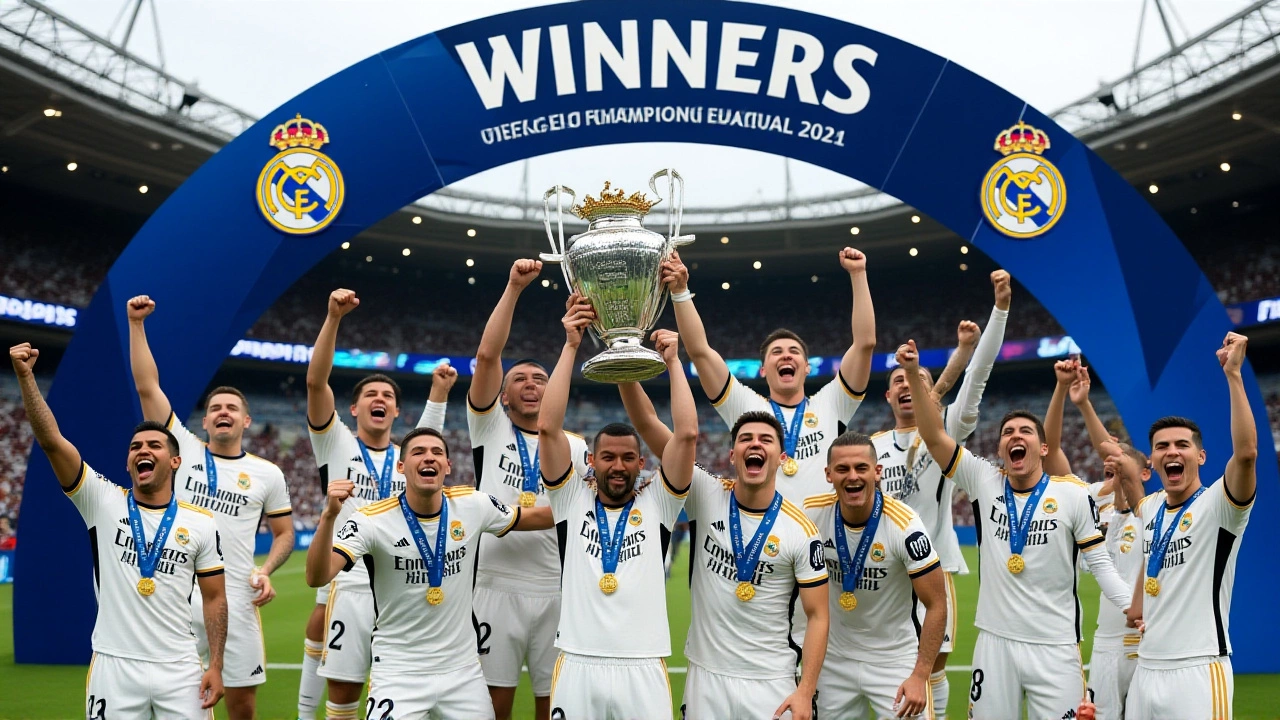
This isn’t just about a video game. It’s about how we consume sports in 2025. Fans don’t just watch matches—they recreate them. They mod the AI, tweak the physics, pit legends against rising stars in digital arenas. The EA SPORTS FC 25 engine is so advanced that the virtual Messi moves like the real one: subtle weight shifts, sudden cuts, that uncanny ability to find space where none exists. The simulation became a canvas for nostalgia, hope, and rivalry. For Inter Miami fans, it was a fantasy fulfilled: Messi leading them to a global title. For Real Madrid loyalists, it was proof Mbappé is the future.Meanwhile, the real FIFA Club World Cup 2025 is still months away, with actual teams yet to qualify. The virtual version has already stolen the spotlight. Streaming platforms are now featuring "simulated finals" as official content. EA Sports hasn’t commented. But insiders say they’re watching closely. The line between simulation and spectacle is dissolving—and it’s changing how we value athletic greatness.
What’s Next for Digital Football?
The next frontier? Live, interactive simulations where fans vote on tactics mid-match. Already, Twitch streamers are hosting "Fan-Controlled Finals," where viewers choose substitutions and set pieces in real time. Imagine Messi facing Mbappé in a live-streamed, crowd-sourced 2025 Club World Cup final—with real-time betting and AI-generated commentary. The technology exists. The audience is waiting.For now, the debate rages on: Was the 1-1 draw more authentic because it showed Messi’s brilliance? Or was the 4-2 result more realistic, reflecting Real Madrid’s dominance in modern football? The answer might not matter. What does matter is this: in the digital age, the most powerful football moments aren’t always played on grass. Sometimes, they’re coded in a PlayStation 5.
Frequently Asked Questions
Was the 1-1 draw between Inter Miami and Real Madrid in the FIFA Club World Cup 2025 real?
No, the 1-1 draw was a simulated match played in EA SPORTS FC 25 on PlayStation 5, created by YouTube creator Aapka Gamer and uploaded on June 12, 2025. It was not an official tournament match. The real FIFA Club World Cup 2025 has not yet taken place, and no actual game between Inter Miami and Real Madrid occurred.
Why did multiple YouTube videos show different scores for the same "final"?
Different creators ran separate simulations with varying tactics, AI settings, and player attributes. The 1-1 result from Aapka Gamer emphasized Messi’s individual brilliance, while KB Test Lab’s 4-2 outcome highlighted Real Madrid’s team dominance. Neither is official—both are fan interpretations, and the conflicting results fueled viral engagement across social media.
Did Lionel Messi actually play for Inter Miami in a Club World Cup final?
No. As of 2025, Inter Miami has never qualified for the real FIFA Club World Cup. Messi led them to the 2024 MLS Supporters’ Shield and set a regular-season points record, but MLS teams must win the CONCACAF Champions Cup to qualify for the global tournament. Inter Miami has not yet achieved that.
Is Kylian Mbappé really scoring hat tricks in the 2025-26 Champions League?
No. The 2025-26 UEFA Champions League season has not begun as of mid-2025. Reports of Mbappé scoring a first-half hat trick against Olympiacos were fabricated or misinterpreted from simulations. Real Madrid’s actual 2024-25 Champions League campaign ended before the reported "Matchday 5" date, and no such performance occurred in real life.
How accurate is EA SPORTS FC 25 in replicating real players like Messi and Mbappé?
EA SPORTS FC 25 uses motion-capture data, biometric stats, and AI-driven movement patterns to replicate players with unprecedented accuracy. Messi’s close control and Mbappé’s explosive acceleration are modeled after real-world footage, making simulations feel lifelike. But physics and AI still have limits—no game can fully replicate the unpredictability of human emotion under pressure.
What impact could these simulations have on future sports broadcasting?
These simulations are already influencing how fans engage with sports. Networks are exploring hybrid broadcasts that blend real matches with AI-generated alternate outcomes, allowing viewers to choose storylines. EA Sports and streaming platforms may soon license official "simulated finals" as premium content, turning fan-created scenarios into monetized events—blurring the line between gameplay and sports journalism.